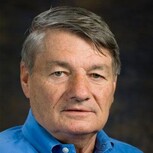
Circadian & Fatigue Expert - Northwestern Univ.
Contact this Expert Witness
- Company: Circadian
- Phone: (781) 439-6325
- Cell: (617) 320-6902
- Website: circadian.com/solutions/human-fatigue-expert-witness-testimony
Specialties & Experience of this Expert Witness
General Specialties:
Transportation and Human FactorsKeywords/Search Terms:
Driver Fatigue, Fatigue Impairment, Human Fatigue, Accident Investigation, Human Factors, Operator Fatigue, Driver Alertness, Circadian Rhythms, Sleep Deprivation, Drowsy Driving, Fatigue Risk Management, Chronobiology, Truck Accidents, Motor Vehicle Accidents, Rail Accidents, Marine AccidentsEducation:
Ph.D., Stanford UniversityYears in Practice:
35Number of Times Deposed/Testified in Last 4 Yrs:
5Additional Information
Dr. Fred W. Turek is an internationally recognized authority on sleep, circadian rhythms, fatigue, shift work, and human performance. He is the Charles E. and Emma H. Morrison Professor of Biology at Northwestern University and Founder and Director of Northwestern University's Center for Sleep and Circadian Biology, one of the world's leading research centers in the field. For more than 40 years, Dr. Turek has conducted pioneering research on the biological mechanisms that regulate sleep, alertness, fatigue, cognition, performance, and health. He is widely recognized for his role in the discovery of the first mammalian CLOCK gene, a landmark breakthrough that transformed modern circadian biology. He is also a co-inventor on multiple U.S. patents related to sleep and circadian regulation. Dr. Turek founded and served as the first President of the Society for Research on Biological Rhythms and has held leadership positions with the Sleep Research Society and numerous scientific journals. His research has been funded by the National Institutes of Health (NIH), NASA, DARPA, the Department of Defense, the National Science Foundation, the Air Force Office of Scientific Research, and the Army Research Office. Dr. Turek has authored more than 375 peer-reviewed publications, scientific reviews, and book chapters involving sleep, circadian rhythms, fatigue, genetics, aging, obesity, mental health, transportation safety, and human performance. Areas of Expertise: - Sleep deprivation and fatigue - Circadian rhythm disorders - Transportation fatigue - Commercial trucking fatigue - Railroad and maritime fatigue - Aviation fatigue and crew scheduling - Human performance and alertness - Fatigue-related accidents - Driver impairment - Occupational fatigue and safety - Sleep disorders - Fatigue risk management - Work-rest scheduling - Circadian disruption - Human factors - Fatigue countermeasures - Military and aerospace fatigue issues A significant portion of Dr. Turek's work has focused on fatigue and performance in transportation and safety-sensitive occupations. As a faculty member of Northwestern University's Transportation Center, he has studied the effects of sleep loss, shift work, and circadian disruption on operational performance and safety. His field research has included studies involving industrial shift workers, commercial towboat crews, and other transportation personnel working nontraditional schedules. Dr. Turek has served on advisory committees and panels for NASA, the National Academy of Sciences, NIH, the U.S. Congress Office of Technology Assessment, and other governmental organizations addressing sleep, fatigue, biological timing, and human performance. He chaired NASA's Discipline Working Group in Regulatory Physiology and the National Academy of Sciences Committee on Space Biology and Medicine. His honors include the Harvard Medical School Division of Sleep Medicine Prize, Guggenheim Fellowship, Distinguished Scientist Award from the Sleep Research Society, and Directors' Awards for Research and Service from the Society for Research on Biological Rhythms. Dr. Turek provides expert consultation, expert reports, deposition testimony, and trial testimony for matters involving sleep, fatigue, circadian disruption, human performance, transportation safety, and fatigue-related accidents.